
2008년부터 우리는 부스 생산 공장을 설립했으며 공장 면적은 약 5800평방미터이며 회사의 주요 제품은 보안 상자, 공공 보안 상자, 교통 파출소 및 기타 상자뿐만 아니라 조용한 사일로, 우주 캡슐, 사과 꼬투리, 휴대용 화장실입니다.
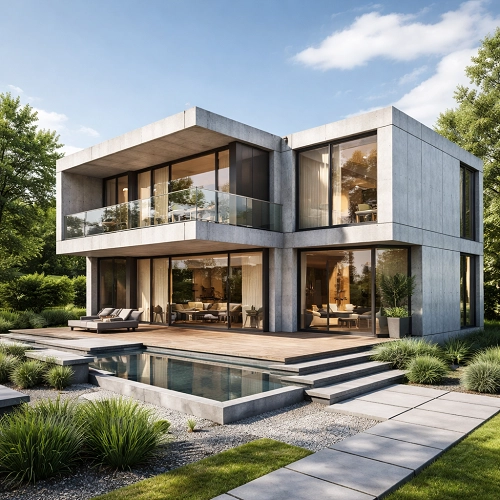
The evolution of construction technologies has significantly influenced how we design and build homes. One of the most transformative innovations in residential construction is the rise of modular housing, and within this sphere, concrete modular houses stand out for their durability, versatility, and sustainability.
Concrete modular houses are residential structures built using precast concrete modules manufactured off-site in controlled factory environments. These modules are then transported to the building site and assembled into a complete structure. Each module typically represents a room or a section of the house, complete with walls, floors, ceilings, and sometimes integrated mechanical, electrical, and plumbing systems (MEP).
Unlike traditional on-site construction, which is labor-intensive and time-consuming, concrete modular construction leverages factory precision, repeatable processes, and standardized components to deliver faster, more consistent results.
The construction of a concrete modular house involves several critical stages:
High-strength reinforced concrete (typically 30–50 MPa) for load-bearing walls and floors.
Lightweight concrete with aggregates like expanded clay or perlite for insulation and reduced weight.
Concrete is inherently strong, fire-resistant, and resistant to pests, mold, and decay. Combined with modern reinforcement techniques, concrete modular houses can withstand:
Factory fabrication reduces on-site construction time by 30–50% compared to conventional building methods, as multiple modules can be manufactured simultaneously.
Controlled environments allow for:
Concrete modular houses contribute to sustainability in several ways:
Contrary to the misconception that modular houses are “boxy,” concrete modules can be designed in diverse forms, including multi-story structures with:
Despite the advantages, concrete modular houses also have challenges:
Modules are constrained by road transport regulations, including width, height, and weight limits, which can limit the size of single modules.
Concrete modules must be supported by robust foundations and carefully engineered joints to prevent differential settlement or cracking.
Factory fabrication requires specialized equipment, molds, and skilled labor, making upfront costs higher than traditional methods. However, the faster construction cycle often offsets these expenses.
While modular design allows flexibility, extreme customization may require additional engineering or hybrid construction methods, slightly increasing costs and time.
Concrete modular construction is not limited to single-family homes; it is also used in:
These applications benefit from modularity, speed, and robustness, particularly in locations with challenging climates or urgent housing needs.
Advanced Materials
Digital Fabrication
Sustainable Practices
Urban Integration
Concrete modular houses represent a fusion of engineering excellence, architectural flexibility, and sustainable innovation. By combining the durability and fire-resistance of concrete with the efficiency and precision of modular construction, these homes offer a compelling solution for modern residential needs. While challenges such as transportation, foundation requirements, and upfront costs exist, the long-term benefits—speed, durability, and sustainability—make concrete modular housing an increasingly attractive choice for homeowners, developers, and urban planners alike.