

2008년부터 우리는 부스 생산 공장을 설립했으며 공장 면적은 약 5800평방미터이며 회사의 주요 제품은 보안 상자, 공공 보안 상자, 교통 파출소 및 기타 상자뿐만 아니라 조용한 사일로, 우주 캡슐, 사과 꼬투리, 휴대용 화장실입니다.
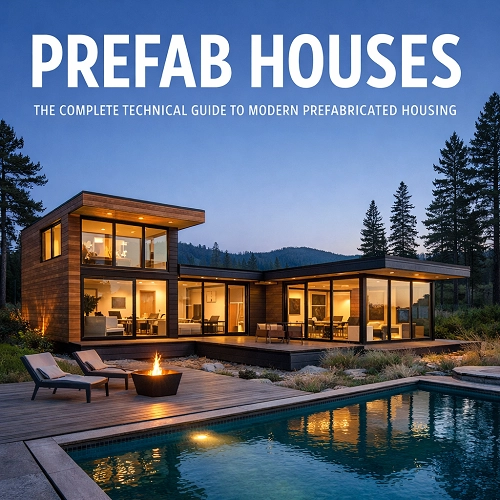
Prefab houses — short for prefabricated houses — are residential or commercial structures whose primary components are manufactured in a controlled factory environment before being transported to a building site for final assembly. Unlike conventional construction, where raw materials are cut, shaped, and joined entirely on-site under variable weather conditions, prefabrication moves the labor-intensive work indoors, compressing timelines, reducing material waste, and achieving tight dimensional tolerances impossible with traditional methods.
The term covers a wide spectrum of technologies. At one end sit panelized systems, where flat wall, floor, and roof panels are fabricated off-site and bolted together on a prepared foundation. In the middle range are volumetric modular buildings, where fully finished three-dimensional modules — complete with plumbing, electrical, and interior finishes — leave the factory and are stacked or connected on-site like building blocks. At the far end sit fully portable units such as container houses, space capsule houses, and folding rooms that require little more than a flat surface to deploy.
ISO 21542 and related standards distinguish prefabricated structures by their degree of off-site completion: Type 1 (component supply), Type 2 (panel or frame supply), Type 3 (volumetric modular), and Type 4 (complete building). Most modern prefab houses sold by manufacturers like Cymdin fall into Types 3 and 4, representing the highest degree of factory completion and the shortest on-site installation time.
The structural performance of a prefab house hinges on its primary load-bearing system. The most common approaches can be grouped into four families: light-gauge cold-formed steel (CFS) frames, hot-rolled structural steel box frames, reinforced concrete modules, and hybrid shell structures derived from repurposed shipping containers.
CFS profiles — typically C-sections ranging from 89 mm to 203 mm deep with 0.9–2.5 mm wall thickness — form the skeleton of most lightweight prefab houses. Factory-punched service holes allow electrical conduit and plumbing pipes to thread through studs without field drilling. CFS frames achieve span-to-depth ratios of up to 40:1 and, when properly engineered to AS/NZS 4600 or EN 1993-1-3, can carry floor live loads of 2.0–4.8 kPa with minimal deflection.
Standard intermodal shipping containers comply with ISO 668, delivering a structural steel skeleton rated to stack 9 loaded containers high — a compressive load of roughly 216 tonnes per corner post. This extraordinary structural redundancy makes container-derived prefab houses naturally resistant to wind uplift and seismic inter-storey drift. Cymdin's Container House range exploits this heritage, combining Corten-equivalent high-strength steel cladding with thermal break-enhanced floor systems to meet residential occupancy standards.
Technical Note: Container-derived structures benefit from built-in redundancy designed for multi-stack maritime loads, giving them an inherent safety factor well above typical residential live-load requirements without additional reinforcing.
Modern prefab housing encompasses a surprisingly diverse catalogue of product types, each optimized for different use cases, site conditions, and budget points. Cymdin's product range illustrates this breadth clearly, spanning six distinct architectural typologies used across residential, hospitality, commercial, and public-safety sectors worldwide.
Futuristic monocoque shell, solar-ready, corrosion-proof, earthquake-rated.
Explore ↗Multi-layer acoustic wall panels; STC 45–55 performance for studios & offices.
Explore ↗The Double Wing Folding Room deserves special mention as an example of deployable architecture: the entire unit folds flat for shipping and unfolds on-site in under four hours without crane equipment, making it ideal for disaster relief, remote construction camps, and event hospitality. Learn more about the company's vision on the About Us page.
Insulation is arguably the most consequential performance variable in a prefab house. Because the building envelope is thin — typically 120–200 mm total wall thickness — every layer must earn its place. Modern prefab manufacturers employ a hierarchy of insulation strategies, from classical mineral wool batts to vacuum insulation panels (VIPs) with effective R-values exceeding R-30 per 25 mm.
| Insulation Type | R-value per 25 mm | Typical Thickness | Fire Rating | Best Use |
|---|---|---|---|---|
| Mineral Wool (Rock Wool) | R-2.8 – R-3.7 | 75–150 mm | Non-combustible A1 | Walls, roofs, acoustic |
| EPS (Expanded Polystyrene) | R-3.6 – R-4.2 | 80–150 mm | Class B–E | SIP panels, floors |
| PIR (Polyisocyanurate) | R-5.6 – R-6.5 | 60–100 mm | Class B | High-perf roof & wall |
| XPS (Extruded Polystyrene) | R-4.5 – R-5.0 | 75–125 mm | Class C–E | Below-grade, floors |
| Spray Polyurethane Foam | R-6.0 – R-7.0 (closed-cell) | 50–75 mm | Class B (with coating) | Container skin, capsule shell |
| Vacuum Insulation Panel (VIP) | R-25 – R-40 | 20–40 mm | Varies | Ultra-thin walls |
Cold-formed steel studs are notoriously efficient thermal bridges; a steel stud at 600 mm centres can degrade the nominal wall R-value by 40–60% if not addressed. The solution is continuous insulation (CI) — a layer of rigid foam or mineral wool board applied to the exterior face of the stud wall, breaking the conduction path. EN 14683 thermal bridge coefficients (Ψ-values) must be calculated for every structural penetration — floor connections, window frames, roof eaves — to ensure the assembled building meets the target U-value, typically ≤ 0.18 W/(m²·K) for energy-efficient residential use.
One of the most compelling selling points of modern prefab houses — particularly capsule houses and circular houses — is their capacity for energy self-sufficiency. Factory integration of photovoltaic panels, battery storage, grey-water recycling, and rainwater harvesting systems transforms a prefab house from a mere shelter into an autonomous living node that can operate in remote locations without connecting to urban utility grids.
Roof-mounted monocrystalline PV panels (efficiency 20–23%) paired with a Maximum Power Point Tracking (MPPT) charge controller and a lithium iron phosphate (LiFePO4) battery bank can supply 3–8 kWh/day — sufficient for lighting, refrigeration, device charging, and a small electric cooking appliance. Cymdin's Space Capsule House is engineered from the factory to support solar and wind power for energy self-sufficiency, with pre-routed conduit channels and structural anchoring points for panel mounting.
Structural resilience is a non-negotiable requirement for any building sold into global markets, and prefab houses face unique engineering challenges compared with site-built construction. The same portability that makes them versatile also means they may be installed in earthquake zones, hurricane-prone coastlines, high-altitude locations with extreme snow loads, or remote sites without access to structural engineering inspection services.
Seismic performance is governed by two mechanisms: resistance to lateral force (achieved through shear walls or braced frames) and ductility — the ability to absorb energy through controlled deformation without collapse. In CFS-framed prefab houses, this is achieved with X-brace or K-brace configurations using steel strap diagonals sized to yield before the primary frame buckles. ISO 668 container units have inherent lateral rigidity from their welded corner post and cross-member arrangement, giving them excellent drift control under seismic excitation. Space capsule houses leverage their monocoque shell geometry — load paths distribute through the continuous skin rather than discrete column-and-beam joints, delivering exceptional mass-specific stiffness.
For lightweight prefab buildings — particularly those without a deep foundation — wind uplift is often more critical than gravity loads. Tie-down systems using galvanised hold-down bolts at 600–1200 mm centres must resist uplift forces calculated per ASCE 7 or EN 1991-1-4, depending on the target market. Container houses enjoy a significant advantage here: their heavy steel base frame acts as ballast, and standard ISO corner castings accept twist-lock connectors that can anchor to concrete footings or steel helical piles with minimal site disturbance.
Engineering Reference: Cymdin's earthquake-resistant and windproof design philosophy — detailed on the company page — is expressed across all product lines through factory-tested structural assemblies, not site-applied reinforcement.
The popular misconception that prefab means cookie-cutter is demonstrably false. Contemporary manufacturers operate on mass-customization platforms — parameterized design systems where dozens of variables (floor plan, facade material, window placement, internal layout, finish palette) can be adjusted within structural constraints without triggering a bespoke engineering review. The result is individualized homes produced at industrial scale.
Exterior cladding choices for prefab houses include fibre cement board (low maintenance, Class A fire), timber composite siding (warm aesthetic, requires periodic treatment), powder-coated steel panels (durable, unlimited color range via RAL or NCS), ceramic tile over stucco, and integrated BIPV (building-integrated photovoltaics) cladding panels. The Apple Cabin's rounded arc form is particularly well-suited to glass-reinforced polymer (GRP) shells, which allow compound curvature impossible with flat panel cladding and can be finished in any RAL colour with UV-stable gel coat.
Most manufacturers offer 3–5 standard floor plan layouts per unit type, with optional upgrades for kitchen specification, bathroom fixtures, flooring material, and smart home integration. Wall partitions within the module are typically non-structural and can be omitted or repositioned by the factory before dispatch. Cymdin states that the appearance and color can be customized according to needs, and the size and style are flexible — a philosophy that extends to bespoke size requests for commercial and hospitality projects. Visit the contact page to discuss project-specific requirements.
The environmental case for prefab housing is compelling and multi-dimensional. At the construction phase, factory manufacture under a covered roof eliminates weather-related material degradation, reduces on-site waste by 30–50%, and concentrates skilled tradespeople in an efficient production cell rather than dispersing them across dozens of sites. Material utilization is optimized by CNC-cut components where every offcut is collected and recycled within the factory — a stark contrast with site-built construction where off-cut timber, insulation, and plasterboard are typically landfilled.
Life-cycle assessment (LCA) studies — notably the WRAP-commissioned analysis of UK off-site construction — consistently show 10–20% lower embodied carbon for volumetric modular buildings compared with their traditionally built equivalents. The mechanism is twofold: less material waste and more efficient factory logistics reduce upstream emissions, while the superior air-tightness achievable in factory conditions reduces operational energy demand for heating and cooling over the building's lifetime, reducing operational carbon.
Unlike poured concrete structures, which are essentially permanent once cast, modular prefab buildings are inherently disassemble-able. Steel framing and structural components can be unbolted and reused in new configurations; a quality container house or capsule house retains 60–80% of its component value after 20 years of use. This circularity supports modular building as a long-term asset rather than a sunk cost.
Prefab houses now serve a remarkably broad range of market segments, from ultra-premium eco-resorts and architectural statement homes to emergency housing, construction site offices, and pop-up retail spaces. Understanding which product type fits which application is key to procurement efficiency.
| Application | Recommended Product | Key Technical Requirements | Typical Lead Time |
|---|---|---|---|
| Permanent Residential | Modular Building | Full building code compliance, permanent foundation | 10–16 weeks |
| Glamping / Eco Lodge | Space Capsule, Circular House | Off-grid capable, minimal site disturbance | 6–10 weeks |
| Vacation Cabin | Apple Cabin | No foundation, portable, rapid deploy | 4–8 weeks |
| Construction Camp | Container House | Robust, stackable, relocatable | 3–6 weeks |
| Recording / Work Studio | Soundproof Cabin | STC ≥ 45, vibration isolation | 6–8 weeks |
| Disaster Relief / Events | Folding Room | Deploy in <4 hrs, no crane required | 2–4 weeks |
Founded in Shanghai in 2008, Cymdin operates from a 5,800 m² factory at No. 66, Caoli Road, Fengjing Town, Jinshan District, Shanghai. The facility produces a full range of prefab units for export — an ideal starting point for international developers and property investors seeking a technically verified, certified manufacturing partner. You can explore the production environment via their immersive Factory VR experience.
Regulatory compliance is one of the most misunderstood aspects of prefab procurement. A module manufactured in Shanghai must be certified to the standards of its destination country — whether that is CE marking for the European Union, UL or ICC-ES acceptance for the United States and Canada, BCA compliance for Australia, or GB 50011 seismic design for domestic Chinese markets. Buyers must specify the target standards at the time of order so the factory can configure structural connections, fire-rated assemblies, and MEP specifications accordingly.
| Region | Primary Structural Standard | Fire Standard | Energy Standard |
|---|---|---|---|
| China | GB 50017 / GB 50011 | GB 50045 | GB 50189 |
| European Union | Eurocodes (EN 1990–1999) | EN 13501 | EN ISO 52000 |
| USA / Canada | ASCE 7 / NBC | IBC Chapter 7 | IECC / ASHRAE 90.1 |
| Australia / NZ | AS/NZS 1170 | NCC Vol. 1 Section C | NCC Section J |
Cymdin holds certifications relevant to its product lines — details are available on the Certificate page. Buyers are strongly advised to request a copy of the third-party test reports and declaration of performance before finalizing any procurement contract.
With dozens of manufacturers and hundreds of product SKUs available globally, the purchasing decision can feel overwhelming. A structured evaluation framework reduces decision fatigue and ensures technical requirements are met before price negotiations begin.
Start with use case clarity: is the building permanent or temporary? Residential or commercial? What is the target climate zone and wind/seismic zone? What are the local planning and building permit requirements? These four questions will eliminate 80% of products from consideration immediately.
Next, evaluate manufacturer credentials: how long have they been operating? Do they hold third-party factory certifications (ISO 9001 quality management, CE marking, or equivalent)? Can they provide reference project photographs and contact details for previous buyers? Cymdin's production history stretches back to 2008, and their company history page and factory documentation offer transparency into manufacturing capability and production scale.
Finally, examine the total cost of ownership — not just the ex-works unit price. Add freight and customs duties, foundation or site preparation costs, utility connection fees, and any import compliance testing. A factory-direct purchase from an established manufacturer like Cymdin, supported by clear technical documentation and responsive after-sales service (reachable via sandy@cymdin.com or WhatsApp +86-18016235839), typically offers better total value than a cheaper unit requiring extensive on-site remediation.